About Me

I'm a designer, a writer, and an analyst.

I like maps. I like pictures. I like to figure out how things work.

Carnot Systems
Contact

richarduwheeler
at
gmail_dot_com

Social Networking Profiles
Twitter
Danger Room
Truman National Security Project
Friday
Oct052012

"Here’s What Bond’s First Flick Got Right About Spycraft, 50 Years Later" On Danger Room

50 years ago today was the cinematic birth of the man who everyone thinks of when they think about spies: James Bond. Dr. No was released October 5, 1962, and ever since James Bond has been synonymous with espionage—much to the chagrin of actual spooks, who have to work in tedious State Department cover jobs processing visa applications and recruit low-level stooges more than they get to ride around in posh cars and bed amorous, well, Bond girls. And it doesn’t matter which government you work for: you’re going to be staying in a Marriott and the per diem on travel is not going to cover those bottles of Dom Pérignon.

The early Bond films can also seem quaint to audiences today, especially when compared to the muscular antics of Daniel Craig crashing through a wall in Casino Royale or the endless Inosanto Lacoste inspired fight scenes from the Bourne movies. Let’s face it: the old Bond would get his ass handed to him by today’s Bond, and in a world where everyone is more crazy about SEAL Team 6 and robots that they are about old-fashioned spies, it’s not even clear that people care too much about today’s Bond.

But a close reading of Dr. No reveals that Ian Fleming’s insights into the real nature of intelligence work remain valid even today. When you strip away the gadgets, and the glamour, and the sex, what remains are some surprisingly real observations about the real secret world of intelligence.

Read the full post at Danger Room.

Wednesday
Sep192012

"How to Talk Like a Pirate … In His Native Javanese" on Danger Room

International Talk Like A Pirate Day is here again for its 10th anniversary. Which means the old gags — shivering your timbers, calling out to your maties,  mispronouncing “Sarsgaard” — are getting kind of stale, especially when there are real-life pirates roaming the high seas. If you really want to rap like a modern-day Captain Jack, it means learning a few choices phrases in a new language – one spoken by the gents hijacking ships right now.

Last year Danger Room’s hard-hitting ITLAPD coverage brought you linguistic quick guides to Somali and Yemeni Arabic. But since then pirate attacks off the Horn of Africa have dropped significantly, especially over this past summer. Some credit may be to the weather, since it turns out that rough seas during monsoon season restrict the ability of Somali pirates to operate. Some credit may also be to the combined efforts of various anti-piracy forces, including those of the United States and the EU, which have stepped up attacks against pirates in the past year. And some credit may be to increased security measures on ships that are passing through the Gulf of Aden and around the Horn of Africa — a trend which continues results reported in 2011. But whatever the reasons, the facts are that attacks are down, and so you may be starting to wonder if all the that time you’ve spent in the last year learning pirate phrases in Somali was worth it. You may even be wondering if it’s worth it to talk like a pirate at all.

Well matorka demee, sailor! Just because piracy is down around Somalia doesn't mean the high seas are safe for mariners the world over. While the drop in Somali piracy has reduced the rate of piracy worldwide, piracy remains high in the number two region for pirate activity in the world: South East Asia and the the Indian Sub-Continent. And the number one area for pirate activity in the region remains Indonesia. In the first half of 2012 there were 32 attacks in Indonesia, one in the Malacca Straits, and four in Malaysia — compared to 21, zero and 11 for all of 2011. If piracy continues at the same rate for the rest of 2012 we can expect a record year for piracy in the region, continuing a trend that started at an all time low mark for piracy in the region in 2009.


So it’s time to learn a little pirate Indonesian, me hearties.

Read the full post at Danger Room.

Thursday
Aug162012

"Report from Tehachapi: Why Wind Power Means Jobs, Security" on the Truman National Security Project

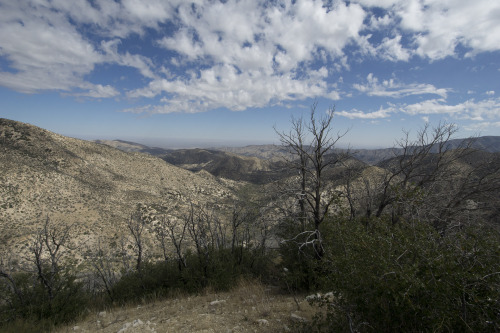
Last week I accompanied a group of veterans who are part of Operation Free on a trip to Tehachapi, CA, located just on the edge of the Mohave Desert in southern California, to learn about wind. There’s a lot of it in Tehachapi —a name that many believe comes from the Kawaiisu word tihachipia, which means “hard climb” — a rugged and mountainous country that was the site of some of the first large scale commercial wind production development nearly 30 years ago, and is the site of continued innovation in developing America’s clean and secure energy future. A future that is threatened unless Congress moves to allow industry to continue to develop and grow this proven, dependable, and clean energy technology by renewing the wind Production Tax Credit (PTC)

Read the full post on the Truman National Security Project blog.

Wednesday
Aug012012

"Turn Left Here? Why Problems with GPS Show our Cyber Weaknesses" on the Truman National Security Project

It turns out that the problems with GPS are bigger than any of us knew about — and that has serious implications about not just GPS, but about the larger cybersecurity debate that is playing out in the Senate this week with the final debate over the revised Cybersecurity Act of 2012.

Last month news broke that a team of researchers from the University of Texas had hijacked a drone by spoofing the GPS used in it’s navigation system. “Spoofing” is a hacking technique that involves fooling a computer into believing that the hacker’s computer is a trusted computer. In this case, the U of T team fooled the drone by sending a signal that pretended to be from satellites in the GPS constellation but contained inaccurate location information — information that would have caused the drone to crash if not for pilot intervention.

Which should worry you not just because GPS helps fly drones but also because none of us know how to get anywhere without it any more.

Read the full post on the Truman National Security Project blog.

Wednesday
Jul182012

"The Senate Cybersecurity Bill: A Start, But Not an Answer" on the Truman National Security Project

It has become a depressing but now familiar pattern: in the space of a week, reports surfaced both that LinkedIn’s mobile app scraped information from users’ mobile devices and stored it on LinkedIn’s servers—without informing it’s users of the practice—and that LinkedIn user passwords had been broken and stolen by hackers since LinkedIn had only lightly encrypted and poorly defended the data. To make matters worse, like many of the similar breaches of recent years, these weren’t discovered or disclosed by LInkedIn but by private security researchers.

There are a number of concerns here, but one of the biggest is that for many workers today LinkedIn has become part of their “critical infrastructure”. It’s used for business development and networking to such a level that it’s unthinkable to remove yourself from the system—even if LinkedIn can’t keep your data safe. And without the pressure of losing users, LinkedIn may have little financial incentive to clean up its security practices. Which leaves users in the position of having to trust that LinkedIn will learn from it’s mistakes—a pretty shaky proposition given recent events.

Read the full post on the Truman National Security Project blog.